Hamilton’s Pharma Cope, Part 4: “The Face of Psychedelic Journalistic Ethics” Transcript
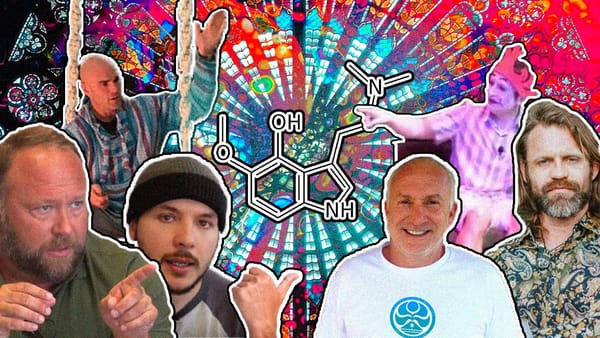
In this episode, we continue the conversation about our funding and explore Hamilton Morris’ conspiratorial claims about the company Usona.
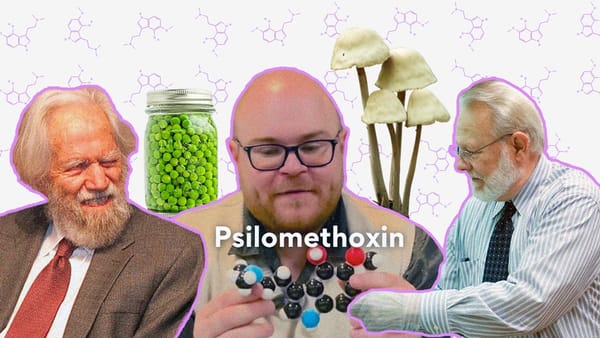
In this episode, we examine previous smear campaigns against us related to our reporting on the Church of Psilomethoxin and Martin Ball, as well as false claims about who funds us and why.
In this episode, we respond to Hamilton Morris’ claims that we are DEA informants and that we colluded with the FDA to get Lykos Therapeutics’ MDMA therapy application rejected.
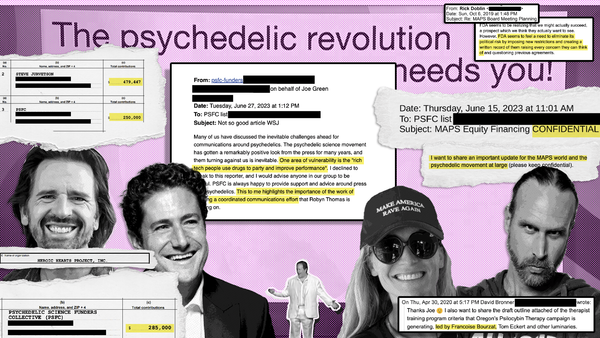
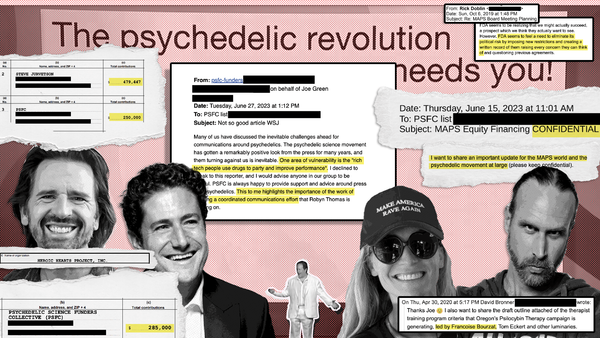
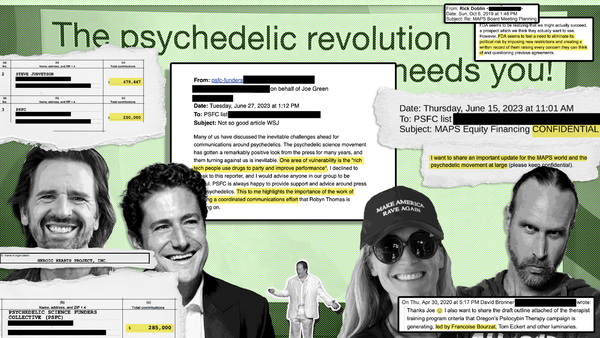
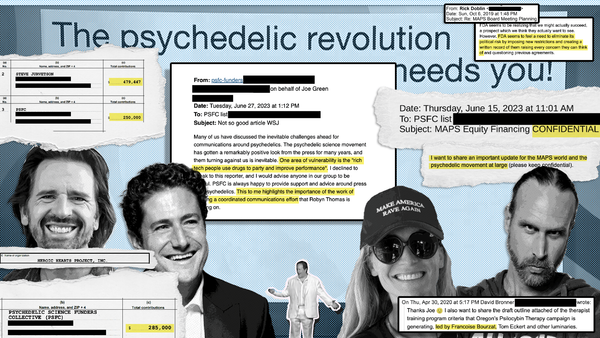
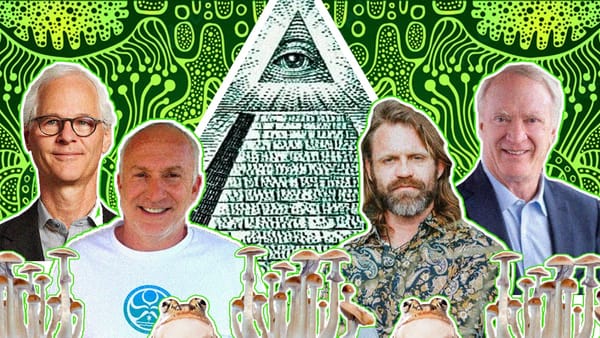
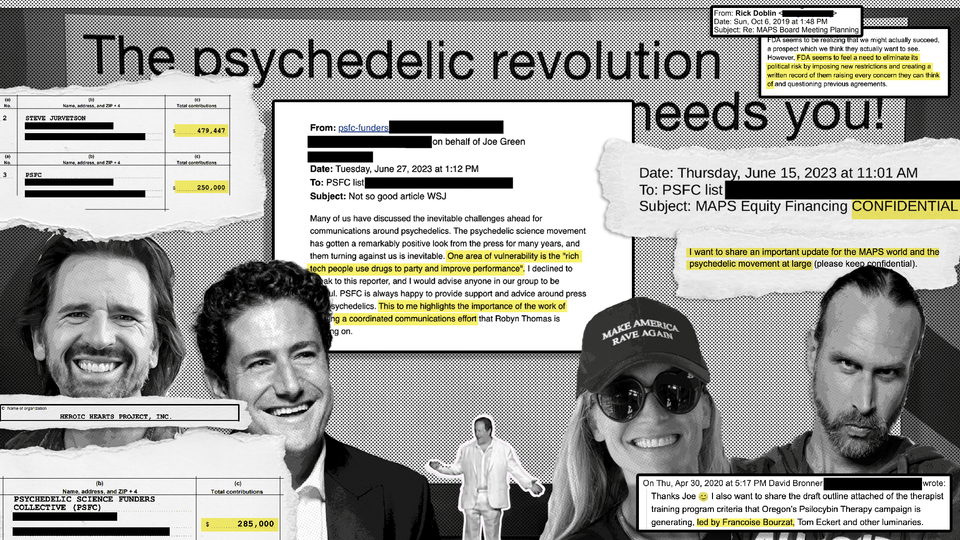
Part 4 of The Psychedelic Syndicate reveals PSFC’s strategy to manufacture spiritual and moral authority through academic capture — even as some members align with far-right ideologies that deepen the very crises psychedelics are meant to heal.
Part 3 of The Psychedelic Syndicate exposes how Silicon Valley’s “move fast and break things” mentality infected psychedelic therapy, creating a culture where leaders rationalized patient harm as unavoidable for progress and ultimately embraced Trump administration officials who promised regulatory
Part 2 of The Psychedelic Syndicate exposes the compromised foundation of PSFC’s influence network — from the abuse scandals that undermined their preferred therapy model, to undisclosed ties with the sole FDA advisory committee member who voted unequivocally for MDMA approval.
Part 1 of The Psychedelic Syndicate reveals how the Psychedelic Science Funders Collaborative (PSFC) — a wealthy network of Silicon Valley elites and Burning Man devotees — systematically captured the psychedelic movement by influencing MAPS, funding its subsidiary Lykos’ MDMA clinical trials, and p
Rather than unpacking the actual causes of Lykos Therapeutics’ disastrous Phase 3 trials and FDA rejection, The New York Times produced a work of fictitious propaganda that prioritizes corporate interests over public health.
In response to the The New York Times February 4 article, “How a Leftist Activist Group Helped Torpedo a Psychedelic Therapy,” Psymposia requested corrections to numerous errors and false accusations.
Veterans deserve the highest quality treatment for PTSD. It’s unacceptable and dangerous to use veterans as guinea pigs for a big pharma profit grab without resolving safety and efficacy concerns.
All the financial conflict disclosures from Psychedelics Science 2023 speakers, in one handy list.
Magazine
In order to present at Psychedelic Science 2023, speakers must agree to two out-of-the-ordinary requests about content exclusivity and MAPS’ reputation.
Magazine
The Church of Psilomethoxin claims it’s the victim of “psychedelic capitalism,” but almost everything it claims is wrong.
Magazine
The Church of Psilomethoxin now admits that its claims about psilomethoxin are solely based on faith. But how strong are the religious convictions of the Church?
Magazine
Psymposia’s investigation into the Church of Psilomethoxin (CoP) turns to the Church’s claims that it’s currently “scientifically impossible” to test for psilomethoxin. Psychedelic chemist David Nichols calls that claim “completely nonsensical and nonscientific.
Magazine
This is the first article in a series investigating the Church of Psilomethoxin (CoP), exploring the recent debate about the Church’s sacrament and the people involved in promoting the Church and its claims.
Magazine
The Multidisciplinary Association for Psychedelic Studies (MAPS) quietly replaced founder Rick Doblin as Executive Director with Kris Lotlikar.
Magazine
Language used by mainstream media affects the way we think about and respond to sexual violence, and no language is neutral. When journalists repeat the misrepresentations of abusers without qualification, they retraumatize victims and perpetuate ongoing misogynistic views about sexual violence.
Magazine
Language used by mainstream media affects the way we think about and respond to sexual violence, and no language is neutral. When journalists repeat the misrepresentations of abusers without qualification, they retraumatize victims and perpetuate ongoing misogynistic views about sexual violence. We recognize that it can be difficult as a
Magazine
Last Week Tonight joined a long and growing list of media outlets that have added fuel to the hype of psychedelic medicalization. By omitting the potential risks and actual harms associated with psychedelic-assisted therapy, this messaging increases the risk to the public by presenting unrealistic e
Magazine
Fluence will no longer seek a trademark for the phrase “Psychedelic Harm Reduction and Integration.”
Magazine
Psychologist Ralph Hood’s study of serpent handling and mysticism helped legitimize the study of psychedelics. So why doesn’t he want them approved for medical use?
Magazine
Throughout his lifetime, Robert Friedland has evolved from Steve Jobs’ psychedelic guru to mining guru, leaving a trail of environmental destruction in his wake.